
Seamless vs Cut-and-Sew: An Honest Guide to How Activewear Is Made

Walk through any activewear shop and you will see two families of garment. One looks knitted in a single piece, with zones of texture flowing into each other and barely a stitch in sight. The other is built from cut panels joined by visible seams. Brands make big claims for both. This article explains how each is actually made, what each genuinely does well, and where the marketing gets ahead of the truth — so you can buy the right construction for your training rather than the best story.
How each one is made
Cut-and-sew is exactly what it sounds like, and it is how most clothing on earth is made: fabric is produced in big rolls, cut into panels from a pattern, and sewn together. The designer controls the garment's shape through those pattern pieces, and can mix different fabrics within one garment — a stretchier back panel here, a firmer waistband there, a mesh insert where you run hot.
Seamless garments are knitted as a tube on specialised circular machines — closer to how socks are made than how shirts are made. The machine varies the stitch as it knits, so ribbing, ventilation zones and compression areas are built into the fabric itself rather than sewn on afterwards. Seamless is a slight fib, though a forgivable one: most seamless garments still carry a few seams, at the gusset, shoulders or side finishing. The point is that there are far fewer of them, and none running across high-friction zones.
Plenty of garments are hybrids of the two, as well: a seamless body with a sewn-in waistband, or a cut-and-sew short with a knitted liner. Manufacturers mix the techniques wherever each earns its place, which is a useful early reminder that neither construction is a religion — they are just tools.
What seamless genuinely does well
The case for seamless is comfort in movement. Fewer seams means fewer edges to rub, and over an hour of repeated movement that matters enormously — it is why our Everyday Seamless Leggings, and most of the best-loved leggings on the market, are knitted this way. The four-way stretch of the knit moves with you in every direction, and body-mapped texture zones add breathability exactly where you actually sweat.
Seamless also forgives sizing wobbles better. Because the compression comes from the knit itself, a seamless legging half a size generous still hugs; a cut-and-sew legging depends on its pattern matching your proportions much more precisely. If you habitually sit between sizes, seamless is usually the safer bet.
- Next-to-skin comfort with no chafe points on thighs, waist or underarm.
- Stretch and recovery in all directions — brilliant for squats, lunges and yoga.
- A close, flexible fit that suits layering and stays put during floor work.
- Texture, ribbing and ventilation knitted in rather than stitched on.
Where cut-and-sew honestly wins
Seamless is not automatically better, whatever the hangtag implies. Because a seamless garment starts life as one continuous knitted tube, the designer has less structural control: you cannot engineer a dramatically different fabric into one zone of the garment. Cut-and-sew wins wherever structure and precision matter more than softness.
- High-support sports bras: serious support needs firm, stable panels and strong seams — which is why genuinely supportive bras, including our High Support Sports Bra, are cut-and-sew.
- Woven training shorts: the light, fast-drying shell fabric of a good short cannot be produced on a circular knitting machine.
- Precise tailoring: sharper lines, pockets, zips and shaping panels all need seams to exist.
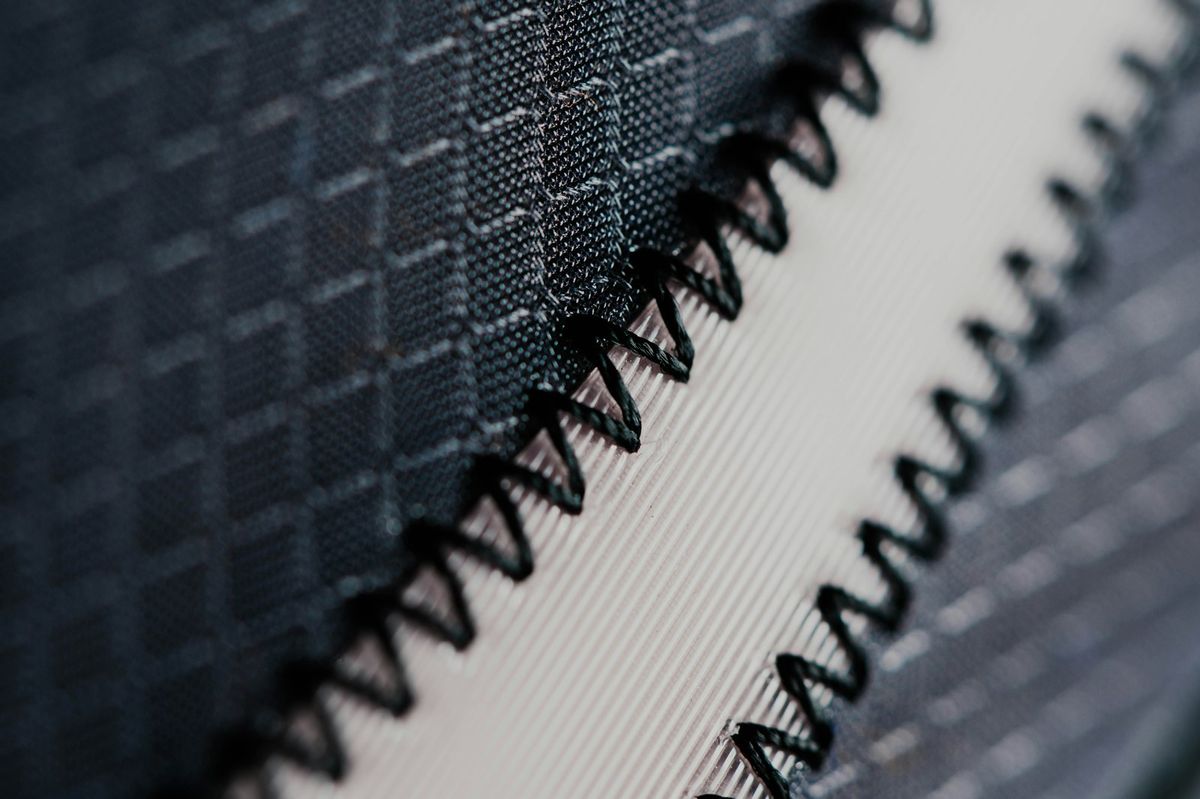
- Durability under abrasion: a well-made flat-locked seam is often more robust against rough surfaces and velcro than a fine seamless knit.
The honest bit: what the marketing skips
Two things brands rarely say out loud. First, seamless knits are usually finer than cut-and-sew fabrics, so cheap seamless goes sheer under stretch far more readily — construction is no substitute for fabric weight, knit density and a proper squat test. Second, seamless has become a marketing word as much as a manufacturing one; some garments labelled seamless are ordinary cut-and-sew in a smooth fabric. Count the seams yourself before you believe the label.
And it cuts both ways: a visible seam is not a defect, and it is not the mark of a cheaper garment. On a bra or a woven short, seams are doing structural work that no knit can do. Judge each garment by whether its construction suits its job, not by which buzzword appears on the swing tag.
A quick durability note as well: fine seamless knits snag on velcro, jewellery and rough gym flooring more easily than woven panels do, so they reward a little care — a mesh wash bag, and a wide berth around lifting straps. Construction affects how you look after a garment as much as how it feels.
Construction is a tool, not a badge of quality. The question is never seamless or not — it is whether this garment is built the right way for what you will do in it.
So which should you buy?
Match the construction to the movement. For leggings, tanks and anything worn tight against the skin through repeated movement, seamless earns its keep — that is where chafe-free comfort and all-direction stretch pay off in every single session. For support and structure — sports bras above low impact, woven shorts, anything with zips and pockets — cut-and-sew is the honest choice. A good kit drawer contains both, each doing the job it is actually built for.
On price, there is no reliable rule: both constructions exist at every price point. What you are paying for in either case is fabric quality, knit density and finishing — which is precisely where cheap garments cut their corners first.
That split is exactly how our own range works: seamless where you want the fabric to disappear, cut-and-sew where you want it to hold firm — you can see both constructions side by side in the shop. And whichever you choose, the fit rules still decide everything: our guide to how leggings should actually fit is the squat-test companion to this one.
Found this useful? Pass it on.